Akong Rinpoché and Samye Ling: Part 2
Becoming a Married Lama
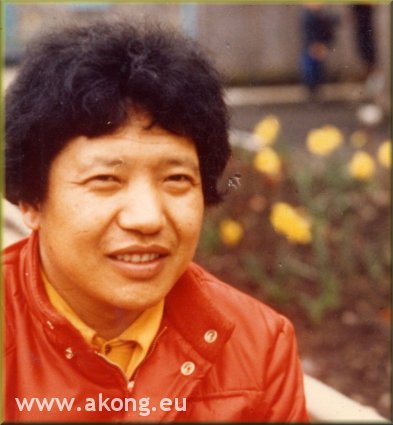 As mentioned in the biographical background, Akong Rinpoché had never taken full monastic ordination but remained with his novice vows, in the light of Jedrung Rinpoché’s guidance. In the UK, he made the choice of living as a married spiritual teacher, as some lamas did in Tibet. Rinpoché held both Kagyu and Nyingma lineages and such is not at all uncommon in the latter. In 1970, he married Yangchen, a Tibetan refugee who had trained as a nurse in Sweden. She joined him in Samyé Ling and a first child, their daughter Karma Lhamo, was born. The small family lived in an upstairs room of Johnstone House. Realising the limits of this situation, both for Rinpoché and for the community, a kind benefactor, Mrs Emmeline Cohen, a long-time former Gurdjieff student drawn to Akong Rinpoché, bought him a property in the nearby town of Dumfries. This not only served as a family home but had some extra rooms suitable for use as a small bed-and-breakfast, thereby able to provide the family an income.
Throughout his time in Samyé Ling, Akong Rinpoché made it a point of honour that neither he nor his family be financially supported by the Centre and in that matter he was always scrupulous and meticulous. He often taught us never to confound what is personal property and what is communal, even down to a tiny paper clip. Rinpoché fathered two sons, Jigmé and Chögyal, after his daughter and also adopted his nephew Dorjé, who became a naturalised UK citizen. The acquisition of the Dumfries house led to a life pattern of weekdays being spent at Samyé Ling and weekends being spent with the family in Dumfries. I was Rinpoché’s main driver through the 1970s and early 80s, ferrying him back and forth in this rhythm. He had started learning to drive but quite early on, following a high-speed crash, with him at the wheel and myself as his companion, on the way to Cambridge for the official opening of Kham House (Chime Tulku's new centre, later to become Marpa House), he decided that it was not his forte and that he would not persist with learning. The slow, mountain-like, deeply-reflective nature of Rinpoché’s mind did not lend itself to the split-second reactivity needed to drive a car.
The ongoing close acquaintance with regular daily life that Rinpoché now found through family life and home ownership, in all their many dimensions, complemented his earlier, Oxford experience of the workplace and the poorer side of life. It gave rise to a very authentic compassion and a real feel for the problems voiced to him by the primarily lay, Buddhist community in the West. It made him have no desire to be the classical Buddhist lama, only preaching theory as had always been done in monasteries. In his own words:
“If I am not dead today or tomorrow, I will not sit on a throne and teach, and have many servants, but I will become the servant of all suffering people.”
I have always felt an enormous debt of gratitude to Akong Rinpoché’s family. They loved him and he loved them ... yet his dedication to his work and life as a tulku meant he spent such limited time with them. Each time I collected Rinpoché to drive him back to Samye Ling, I told myself how our gain, in having him there in Eskdalemuir, was their loss. Their practice of generosity, in allowing this to happen graciously, has been an enormous gift to the world.
......continue to the next part of the story: Setting the Bases for Kagyu Dharma